What Is a Constant Current LED Driver? How to Choose the Right One
Key Takeaways
- A constant current LED driver supplies a steady amount of electrical current to your LEDs, ensuring consistent brightness and preventing damage.
- These drivers are ideal for high-power LEDs, individual fixtures, and situations where stable light output is a priority.
- They help extend the lifespan of your LEDs by preventing overheating and operating them within safe limits.
- When choosing a constant current driver, match its current output to your LED's requirements and check that its voltage range is suitable.
- Consider factors like dimming needs, environmental conditions, and safety standards when making your final selection.
Understanding Constant Current LED Drivers
So, you're looking into powering some LEDs and you've stumbled across the term 'constant current LED driver'. What exactly is it, and why should you care? Well, think of it like this: LEDs are a bit picky about their power. They don't just want any old electricity; they need a steady, controlled flow of current to work their best and last a good long time. That's where the constant current driver, sometimes called an LED transformer or LED power supply, comes in.
What a Constant Current LED Driver Does
At its heart, a constant current (CC) LED driver's job is pretty straightforward: it makes sure the amount of electrical current flowing through your LEDs stays exactly the same, no matter what. Unlike a constant voltage driver that keeps the voltage steady, a CC driver actively adjusts its output voltage to maintain a specific, pre-set current. This is often described as LED current regulation explained. If the LED's resistance changes (which can happen with temperature fluctuations), the driver compensates. This precise control is vital for high-power LEDs and applications where consistent light output is a must.


Benefits of Using a Constant Current LED Driver
Why go through the trouble of using a CC driver? There are some solid advantages:
- Consistent Brightness: Because the current is fixed, your LEDs will shine at a uniform brightness. No more annoying flickering or dimming as the power supply wavers.
- Longer LED Life: LEDs can be sensitive to too much current, which leads to overheating and premature failure. A CC driver keeps the current within safe limits, significantly extending the lifespan of your LEDs.
- Optimised Performance: By providing the exact current the LED is designed for, you get the most efficient light output without wasting energy.
- Protection: It guards against voltage spikes and other power irregularities that could damage your LEDs.
When you're dealing with LEDs, especially in more demanding applications like commercial lighting or high-bay setups, using the right driver isn't just about getting the lights to work; it's about making sure they work reliably and last as long as they're supposed to. It's a small component that makes a big difference.
When to Choose a Constant Current LED Driver
So, when is a constant current driver the best constant current driver for LEDs you can get? You'll want to opt for one in these situations:
- Individual LED Fixtures: If you're powering single, high-power LED modules or fixtures that have specific current requirements.
- Consistent Light Output is Key: For applications where uniform brightness is non-negotiable, such as retail displays, architectural lighting, or stage lighting.
- Maximising LED Lifespan: If you're aiming to get the absolute longest life out of your LEDs, especially in environments where heat management might be a challenge.
- Series-Connected LEDs: When you wire multiple LEDs in a series string, a CC driver is usually the way to go, as it ensures each LED in the chain receives the same current.
Constant Current Versus Constant Voltage Drivers
Right then, let's get down to brass tacks and figure out the difference between constant current and constant voltage LED drivers. It's not as complicated as it sounds, honestly. Think of it like this: one focuses on keeping the flow of electricity steady, while the other keeps the electrical pressure steady. Both have their place, and picking the wrong one can lead to all sorts of bother, like LEDs not lasting as long as they should or just not looking right.
Key Differences in Operation
The main thing to get your head around is what each type of driver actually does. A constant current driver is all about maintaining a precise, steady flow of electrical current. It's like a tap that always lets the same amount of water through, no matter how much pressure is behind it. This is super important for LEDs because they're quite sensitive to the amount of current they receive. Too much, and they can overheat and burn out; too little, and they won't be as bright as they could be. This type of driver will adjust its output voltage to keep that current exactly where it needs to be. You'll often see these specified with a current rating, like 350mA or 700mA, and a voltage range it can operate within.
On the flip side, a constant voltage driver, sometimes called a constant voltage transformer in older systems, just keeps the voltage at a fixed level. Imagine a water pipe that always has the same pressure. The amount of water (current) that flows will then depend on what's connected to the end of the pipe. These are usually set at common voltages like 12V or 24V. They're simpler in that regard, but they don't offer the same level of fine-tuned control over the current going into the LEDs themselves. The LEDs connected to a constant voltage driver need to have their current managed internally, or they're wired in a way that naturally limits the current.
Application Scenarios for Each Type
So, when do you actually use one over the other? It really boils down to the type of LED product you're working with.
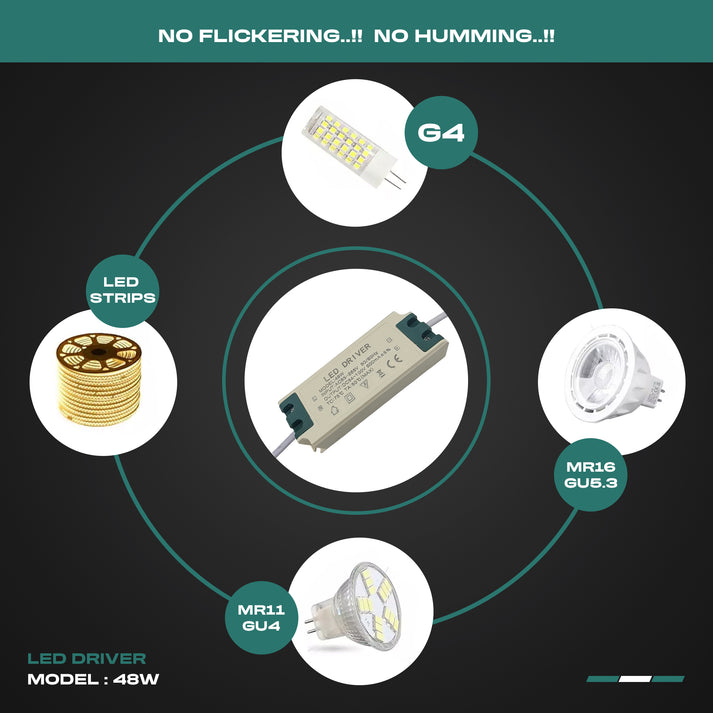
- Constant Current (CC) Drivers: These are your go-to for individual LED modules or fixtures where you need exact current control. Think of high-power downlights, spotlights, or commercial lighting installations. They're also brilliant for ensuring consistent brightness across multiple LEDs wired in series, which is common in many professional setups. If you're aiming for the longest possible lifespan for your LEDs and want to avoid any flickering or dimming issues, a CC driver is usually the way to go. They help prevent thermal runaway, which is basically an LED getting too hot and damaging itself.
- Constant Voltage (CV) Drivers: These are much more common for LED strip lights, under-cabinet lighting, or decorative accent lighting. These types of products are designed to run on a specific voltage (like 12V or 24V), and they often have resistors built-in to manage the current. Because you can wire multiple LED strips or sections in parallel to a CV driver, it makes for a more flexible and often simpler installation. If you're doing a DIY project and need to power several lengths of LED tape, a CV driver is probably what you'll need. They're generally easier to wire up for these kinds of applications.
Matching Driver Type to LED Specifications
Choosing the right driver isn't just about preference; it's about making sure your LEDs get exactly what they need to perform well and last. Always check the datasheet for your specific LED product. It will tell you whether it's designed to be run from a constant current source or a constant voltage source. For instance, if the LED is rated at, say, 700mA, you'll want a constant current driver that outputs 700mA. If you're using a pre-made LED strip that says '12V' on it, then you'll need a 12V constant voltage driver. Trying to power a 700mA LED module with a constant voltage driver without proper current limiting will likely fry the LED very quickly. Conversely, using a constant current driver on a simple 12V LED strip might not work correctly or could even damage the driver if the voltage it needs to produce is outside the driver's range.
When you're looking at power supplies for larger setups, like powering multiple devices or a big bank of LEDs, you might come across units that are quite robust. For example, a 120W, 12V industrial switching power supply is designed for heavy-duty use. These are typically constant voltage units, but they provide a very stable output suitable for many parallel LED configurations. The key is that the LEDs themselves must be able to handle the voltage and manage their own current draw.
It's a bit like matching the right plug to the right socket – get it wrong, and nothing happens, or worse, something breaks. For serious, high-load applications, you might even look at something like a 120W, 12V, 10A industrial switching power supply if your LEDs are designed for that voltage.
Selecting the Appropriate Constant Current LED Driver
Right then, choosing the correct constant current LED driver for your project is a bit like picking the right tool for a job – get it wrong, and things can get messy. It’s not just about plugging something in and hoping for the best. We need to get this right to make sure your LEDs don't just work, but work well and last a good long time. This section is all about making that led power supply selection process a bit clearer.
Determining LED Power and Current Requirements
First things first, you need to know what your LEDs actually need. Most LEDs will have a datasheet, and this is your best friend. Look for the 'forward current' (often abbreviated as 'If') and the 'forward voltage' (Vf). The forward current is the amount of current the LED is designed to run at for optimal performance and lifespan. It's usually measured in milliamps (mA) or amps (A). For example, a common value might be 350mA or 700mA.
If you're using multiple LEDs, how you wire them up makes a big difference. If they're in series, the current is the same for all of them, but the voltage adds up. If they're in parallel, the voltage is the same, but the current splits. For constant current drivers, wiring LEDs in series is generally the way to go. You'll need to sum up the forward voltages of all LEDs in the series string to get a rough idea of the minimum voltage your driver needs to supply. The total power (in Watts) is simply the forward current multiplied by the forward voltage (P = I x V). This gives you a ballpark figure for the driver's output capacity.
Understanding Voltage Range Compatibility
Constant current drivers don't just output a single voltage; they operate within a specific voltage range. This is super important. The driver will adjust its output voltage to maintain the set current, but it can only do this within its specified limits. You'll see this listed as a 'voltage range' or 'output voltage range' on the driver's specs. For instance, a driver might be rated for 9-36V DC. This means it can supply its set current as long as the total forward voltage of your LED string falls somewhere between 9 and 36 volts.
If your LED string's total forward voltage is too low for the driver's minimum, the driver might not be able to regulate properly. If it's too high for the driver's maximum, you risk damaging the driver or the LEDs. So, when you're looking at drivers, make sure the voltage range comfortably covers the calculated total forward voltage of your LED setup. It’s a good idea to have a bit of headroom, so the driver isn't constantly working at its absolute limit. For more on this, checking out how to select an LED driver can be helpful.
Considering Environmental Factors for Performance
Don't forget where your driver is going to live. Is it going to be tucked away in a warm, dry cupboard, or is it going to be out in the elements, maybe in a garden light fixture? Temperature is a big one. Most drivers have an operating temperature range, and if they get too hot, their performance can suffer, and their lifespan can be dramatically reduced. Some drivers are designed for tougher conditions, like outdoor use, and might have an IP rating (like IP67) to show they're protected against dust and water.
The efficiency of a driver also plays a part here. A more efficient driver wastes less energy as heat, which means it runs cooler. This can be a significant advantage, especially in enclosed fixtures where heat can build up. Always check the driver's efficiency rating and consider its thermal management capabilities.
When you're thinking about the whole setup, it's not just about the LEDs and the driver. You've also got to consider the wiring, any dimming controls you might want, and how everything connects together. Making sure all the components are compatible and rated for the job will save you headaches down the line. It’s all part of the process of choosing an LED driver that’s going to do the job properly.
Advanced Features and Considerations
So, you've got a handle on the basics of constant current LED drivers and how to pick one that matches your LEDs. But what else should you be thinking about? Well, there are a few extra bits and bobs that can make a big difference to your lighting setup, especially if you're aiming for something a bit more sophisticated or need to meet certain standards.
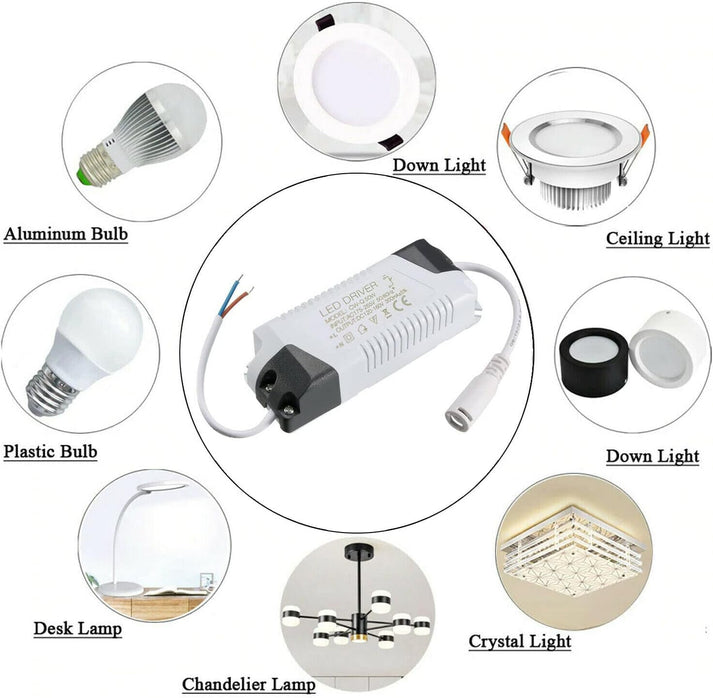
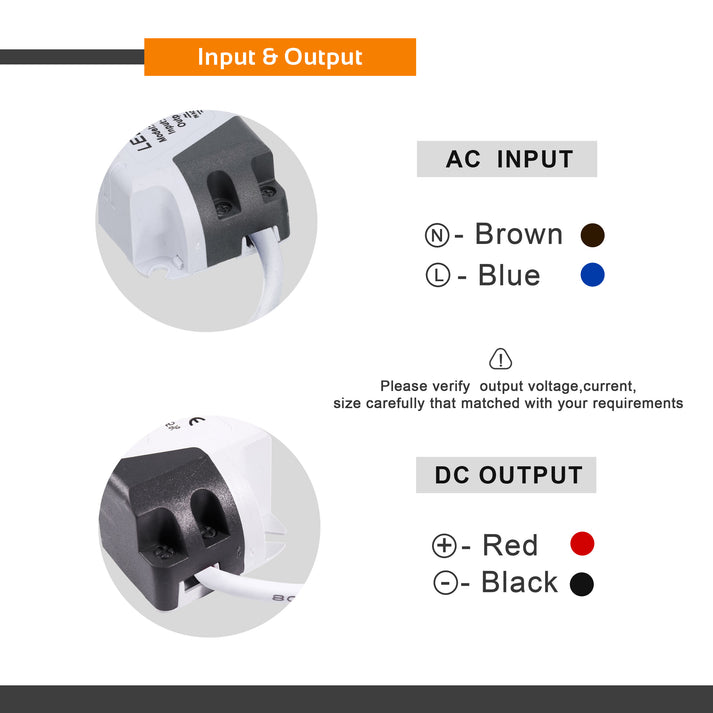
Exploring Dimmable Constant Current LED Driver Options
Dimming is a popular feature, and it's not as complicated as it might sound. For low-voltage DC drivers, you can often use a simple potentiometer. This gives you a nice, smooth control from 0% to 100% brightness. It's a straightforward way to adjust the mood or light level in a room. Some drivers might use pulse-width modulation (PWM) for dimming, which is also very effective. For AC drivers, dimming can be a bit more involved, sometimes requiring specific dimmer switches that are compatible with LED loads. Always check the driver's specifications to see what dimming methods it supports and what kind of dimmers you'll need. Getting this right means you can really tailor the lighting to your needs.
Ensuring Safety and Efficiency Standards
Safety and efficiency are pretty important, not just for your wallet but for the longevity of your LEDs and the overall system. You'll want to look for drivers that meet recognised standards. For instance, drivers with high efficiency ratings (think 85-95%) mean less power is wasted as heat. This not only saves on your electricity bill but also means less heat needs to be managed, which can simplify your design. Standards like those from the Department of Energy (DOE) or ENERGY STAR certification are good indicators that a driver performs well and is built to last. Also, pay attention to the power factor (PF) and total harmonic distortion (THD). A high PF (close to 1) is good, and low THD means the driver won't cause interference with other electrical equipment. It's worth looking into LED driver efficiency standards to get a better idea of what to aim for.
The Role of Constant Power Drivers
While we've focused on constant current, it's worth mentioning constant power drivers. These are a bit different. Instead of maintaining a steady current, they keep the power delivered to the LEDs constant. This can be useful in applications where you have a string of LEDs with varying forward voltages, perhaps due to temperature changes or manufacturing tolerances. A constant power driver will adjust the current to keep the total power draw steady.
This can be a neat solution for certain complex setups, offering a different way to manage LED performance. It's a bit more specialised, but good to know it's out there if your project has unique needs. For more on the basics of how these devices work, you might find what a LED driver circuit does helpful.
Conclusion
Choosing the right LED driver is pretty important for making sure your lights work well and last a long time. A constant current LED driver gives you great control and keeps your LEDs performing consistently, which is especially good for brighter or more complex setups. By understanding your LED's needs and the driver's specs, you can pick one that fits perfectly. Whether it's for a small home project or a bigger job, getting the driver right means better light, less hassle, and saving a bit on your energy bills. If you're ever unsure, it's always a good idea to check the product details or ask for advice.
Frequently Asked Questions
What exactly does a constant current LED driver do?+
A constant current LED driver ensures a steady flow of electricity (current) to the LED while automatically adjusting voltage as needed. This protects the LED from receiving too much or too little current, helping maintain consistent brightness and extending its lifespan.
Why would I need a constant current driver instead of a constant voltage one?+
A constant current driver is used when precise current control is required, such as with high-power LEDs or LEDs connected in series. It provides consistent brightness, better performance, and improved LED longevity compared to constant voltage drivers.
How do I know if my LED needs a constant current driver?+
Check the LED datasheet for the forward current rating, usually shown in milliamps such as 350mA or 700mA. If the LED specifies current rather than voltage, it typically requires a constant current driver.
Can I use a constant current driver with LED strips?+
Most LED strips are designed for constant voltage operation because they include built-in resistors. Therefore, they usually require a constant voltage driver, while constant current drivers are better suited for individual LEDs or LED modules.
What happens if I pick the wrong constant current LED driver?+
If the current is too high, it can damage or burn out the LED. If it is too low, the LED will appear dim and underperform. It is also important to ensure the driver’s voltage range matches the total forward voltage of the LED string.
Are constant current LED drivers dimmable?+
Many constant current LED drivers are dimmable, but not all. Dimming methods may include PWM, 0–10V, DALI, or TRIAC depending on the driver. Always check product specifications to confirm dimming compatibility.
Labels: