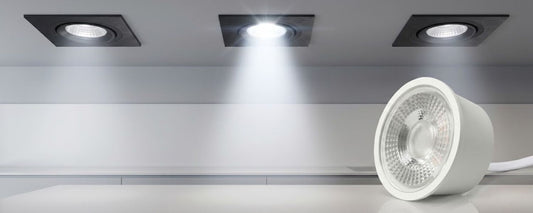
Indirect and Direct Lighting: Combined Lighting Concepts for Optimised Room Design
Lighting is often the last thing homeowners think about when planning a room, yet it's arguably the single biggest factor in how a space actually feels once the furniture is in place and the paint has dried. Two rooms with identical layouts, colour schemes and furnishings can feel completely different depending on how they're lit. The secret professional lighting designers rely on isn't a single clever fitting — it's the interplay between direct and indirect lighting, layered together to create depth, comfort and function.
In this guide, we'll break down exactly what direct and indirect lighting are, why neither works well in isolation, and how to combine them room by room to achieve a genuinely professional result — without needing an electrician's degree to understand it.
What Is Direct Lighting?
Direct lighting refers to any light source that shines light straight onto a surface or object with minimal diffusion. Think of a downlight aimed at a kitchen worktop, a desk lamp angled over a laptop, or a spotlight trained on a piece of artwork. The light travels in a fairly narrow, focused beam from the fitting to the target area.
Characteristics of direct lighting:
- High intensity in a concentrated area
- Sharp, well-defined shadows
- Excellent for task-based activities
- Can create glare if positioned incorrectly
- Typically the most energy-efficient way to light a specific task zone
Common direct lighting fixtures include:
- Recessed downlights and spotlights
- Track lighting
- Desk and table lamps for reading
- Under-cabinet LED strip lighting in kitchens
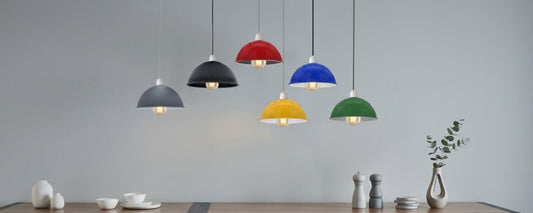
- Pendant lights positioned directly over a dining table or kitchen island
Direct lighting is essential wherever precision matters — chopping vegetables, reading, applying makeup, or working at a desk. Without it, task areas feel dim and eye strain increases. But a room lit exclusively with direct lighting tends to feel harsh, clinical and unbalanced, with pools of brightness surrounded by dark, undefined edges.


What Is Indirect Lighting?
Indirect lighting takes the opposite approach. Rather than aiming light at a surface, it bounces light off a wall, ceiling or other reflective surface before it reaches the eye. This diffusion softens the light considerably, spreading it more evenly across a space and reducing harsh shadows.
Characteristics of indirect lighting:
- Soft, diffused illumination
- Minimal glare
- Creates ambient, atmospheric light
- Enhances the perceived height and openness of a room
- Reduces contrast between light and dark zones
Common indirect lighting techniques include:
- Cove lighting recessed into a ceiling perimeter or bulkhead using slim LED panels
- LED strip lighting hidden behind a headboard, shelf or plinth
- Uplighters that wash light across a wall or ceiling
- Wall lights and sconces that direct light upward or shield the bulb from direct view
- Floor lamps with opaque or fabric shades that diffuse the light source
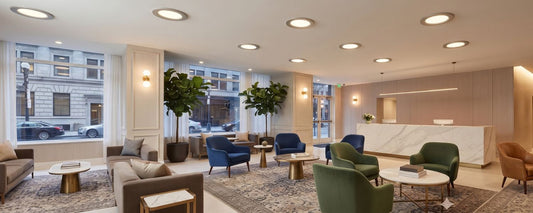
Indirect lighting is what gives a room its mood. It's the layer responsible for that warm, inviting glow you notice in a well-designed hotel lobby or restaurant, where you can't always identify where the light is actually coming from — and that's precisely the point.


Why You Need Both
Relying on only one type of lighting almost always produces a disappointing result.
Direct lighting alone creates a room that feels functional but sterile. Overhead downlights spaced evenly across a ceiling — sometimes referred to as the "portholes on an aeroplane" effect — flood a space with flat, even light that flattens architectural features, washes out furnishings and leaves little room for atmosphere. It's practical, but rarely pleasant to spend time in.
Indirect lighting alone creates a room that feels atmospheric but impractical. Soft ambient glow is wonderful for relaxing, but it's next to useless when you're trying to read a book, cook a meal or find something in a drawer.
The solution used by professional interior and lighting designers is layered lighting — combining direct and indirect sources so each does the job it's best suited for. This is often broken down into three layers:
- Ambient lighting — the overall base level of light in a room, frequently achieved through indirect sources
- Task lighting — direct, focused light for specific activities
- Accent lighting — direct or semi-direct light used to highlight features, texture or artwork
When these three layers work together, a room gains depth. Light and shadow interact naturally, creating visual interest rather than flat uniformity, while every functional need is still comfortably met.
Combining Direct and Indirect Lighting: Room by Room
The living room typically demands the widest range of lighting scenarios — bright enough for reading, dim enough for watching a film, and warm enough for entertaining guests.
- Ambient (indirect): LED strip lighting concealed behind a floating shelf or TV unit, or an uplighter positioned in a corner to wash light across the ceiling
- Task (direct): A table lamp beside the armchair or sofa for reading
- Accent (direct): Spotlights or picture lights trained on artwork, a feature wall, or an alcove display
A dimmable circuit is invaluable here, allowing the balance between direct and indirect light to shift depending on the time of day or occasion.
Kitchens are one of the most demanding spaces to light correctly because they combine intensive task work with, increasingly, a social or dining function.
- Ambient (indirect): Perimeter cove lighting or LED strips above wall units, bouncing light off the ceiling
- Task (direct): Under-cabinet LED strips illuminating worktops directly, plus recessed downlights over key work zones
- Accent (direct): Pendant lighting over an island or breakfast bar, which doubles as both task lighting and a design statement
Without under-cabinet task lighting, worktops are frequently left in the lit person's own shadow — a common and easily avoided design flaw.
Bedrooms benefit enormously from a softer approach, since the primary function is rest rather than intense activity.
- Ambient (indirect): LED strip lighting behind or beneath the headboard, or a wall-mounted uplighter
- Task (direct): Bedside table lamps or wall-mounted reading lights with an adjustable head
- Accent (direct): A statement pendant or spotlight highlighting a piece of art or a textured feature wall
Avoid a single central ceiling light as the sole source — it's the least flattering and least versatile option for a room meant to promote relaxation.
Home Office
A workspace needs plenty of direct, glare-free task lighting to reduce eye strain during long working hours, balanced with enough ambient light to prevent excessive contrast between the screen and the surrounding room.
- Ambient (indirect): A wall-washer or uplighter to raise the general light level in the room
- Task (direct): An adjustable desk lamp positioned to avoid screen glare, plus overhead task lighting if the desk sits away from a window
- Accent (direct): Optional — shelving spotlights for books or personal items
Practical Tips for Getting the Balance Right
Layer on separate circuits. Wherever possible, put ambient, task and accent lighting on separate switches or dimmer circuits. This is what allows a room to transform from bright and functional during the day to calm and atmospheric in the evening, using the exact same fittings.
Mind the colour temperature. Mixing warm white (around 2700–3000K) ambient light with a cooler white (4000K+) task light in the same space can create a visually jarring, mismatched effect. As a general rule, keep colour temperatures consistent within a single room, adjusting warmth to suit the room's function — warmer for bedrooms and living rooms, cooler for kitchens and home offices.
Use dimmable fittings. Dimming isn't just about saving energy; it's a design tool. Fitting dimmable LED bulbs throughout the ambient layer allows the same indirect lighting to serve a bright morning routine and a relaxed evening in the same space.
Don't forget vertical surfaces. Most rooms are lit almost exclusively from above. Introducing light that hits walls — through wall lights, uplighters or cove lighting — makes a room feel taller, larger and considerably more three-dimensional.
Plan lighting early, not last. Retrofitting concealed indirect lighting after walls are plastered and floors are laid is far more disruptive and costly than planning cabling and recesses during a renovation or build. If concealed lighting is on the wish list, it needs to be part of the earliest design conversations.
Common Mistakes to Avoid
- Over-reliance on a single central pendant or downlight grid — this produces flat, shadowless light with no depth or character
- Mixing incompatible colour temperatures within the same visual field
- Placing task lighting where it causes glare, such as a desk lamp positioned directly in the eyeline rather than angled onto the work surface
- Ignoring dimming controls, which limits a room to a single lighting mood regardless of time of day or activity
- Treating lighting as decoration only, rather than a functional layer that needs to support how the room is actually used
Final Thoughts
The most successful room designs rarely rely on one dominant light source. Instead, they use direct lighting to handle precision and focus, and indirect lighting to build atmosphere and softness — layering the two so that every function of a room, from reading a book to hosting friends, is properly supported.
Getting this balance right doesn't require an extensive lighting budget. It requires a plan: identify what each area of the room is used for, choose the right type of light — direct or indirect — for that function, and put each layer on its own switch wherever possible. The result is a space that adapts effortlessly to whatever the moment calls for, and looks considerably more polished for it.
Whether you're planning a full renovation or simply upgrading a single room, thinking in layers rather than fittings is the single most effective shift you can make in your approach to lighting design.
Labels:
Vorig
Kitchen LED Strip Lighting: The Complete Planning & Installation Guide
Volgende
5 Electrical Wiring Mistakes That Cause Faults at Home (And the Connector That Fixes Each One)